
Let’s be honest, technology is moving fast. Faster than most of us expected.
AI can now write, speak, answer questions, and even sound like human. So it’s not surprising that it’s starting to show up in places we never imagined – “The Church”
Some churches are already using AI to help write sermons or respond to people’s questions. And naturally, this brings up a question that feels both interesting and a little uncomfortable:
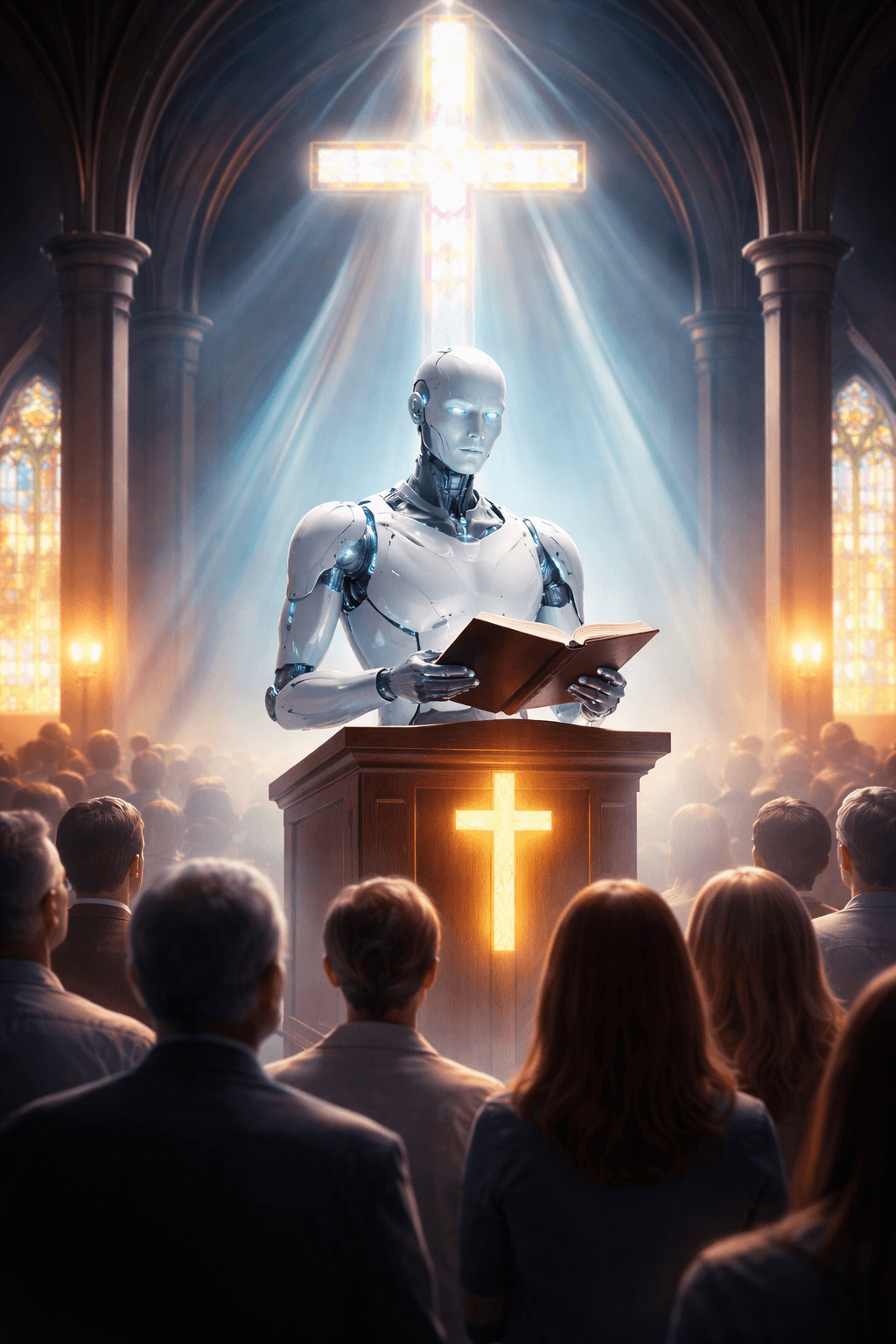
Is it actually wrong for churches to use AI pastors?
It Sounds Helpful… But Something Feels Off
At first, AI in church doesn’t seem like a bad idea.
It can save time. It can organize thoughts. It can even explain Bible passages clearly. For a busy pastor or a small church, that might feel like a blessing.
But when you really think about it, something doesn’t sit right.
Because church isn’t just about information, it’s about connection. It’s about real people, real struggles, and real moments with God.
And that’s where the question gets deeper.
A Pastor Is More Than Just Words
A real pastor doesn’t just stand and talk.
They pray for people. They sit with someone who’s hurting. They guide, correct, encourage, and sometimes even carry burdens that no one else sees.
There’s something deeply personal about it. It’s not just knowledge, it’s calling.
And that’s the part AI can’t replicate. It can give you words, but it can’t give you presence. It can sound wise, but it doesn’t actually know God.
The Real Concern Isn’t AI… It’s Dependence
Here’s where it gets serious.
Using AI as a tool? That’s not really the issue.
The danger is when we start to lean on it.
When a church begins to depend on AI for direction, for teaching, or for leadership, something slowly shifts. What used to come from prayer and seeking God can start coming from convenience and speed.
And the scary part? You might not even notice it happening. Everything could still look “fine” on the outside. But inside, something important is being replaced.
Can AI Ever Truly Lead a Church?
Think about it this way.
Can AI feel compassion for someone going through pain?
Can it pray and actually connect with God?
Can it be led by the Holy Spirit?
The honest answer is no.
AI can process information, but it doesn’t have a soul. It doesn’t have faith. It doesn’t have a relationship with God.
So while it can assist, it can never truly lead in the way a pastor is meant to.
So… Is It Wrong or Not?
The answer isn’t just black and white, but it’s clear enough. If AI is being used in the background as a helper, that’s one thing.
But if it starts taking the place of a pastor… if it becomes the voice people rely on spiritually… then yes, that’s a problem.
Because God didn’t design His Church to be led by systems. He designed it to be led by people who know Him.
At the End of the Day
This isn’t really just about AI. It’s about what we trust.
It’s about whether we’re choosing what’s fast and easy… or what’s real and spiritual.
Technology will keep advancing. That’s not going to stop. But the Church has to be careful not to lose what makes it the Church in the first place.
Because no matter how smart AI becomes, it will never replace:
- A life surrendered to God
- A heart that truly cares
- A voice that is led by the Holy Spirit
Final Thought
Maybe the real question isn’t just:
“Is it wrong for churches to use AI pastors?”
Maybe the deeper question is:
“Are we slowly replacing God without realizing it?”






Leave a Reply